Music · Web
Tuning the Search: Helping Sofar Sounds Fans Find Their Next Show
Reimagining search and discovery for Sofar Sounds, turning a clunky event hunt into an intuitive journey from genre curiosity to ticket in hand.
- Role
- User Researcher · UI Designer
- TIMELINE
- 5 weeks
Objective
Redesign the search experience on the Sofar Sounds website so fans can effortlessly discover intimate live music events by genre, city, and vibe, strengthening the connection between artists, venues, and the audiences that love them.
The problem
Sofar Sounds hosts intimate live music events in over 400 cities, but the search experience didn't match the magic of the shows. Unclear search functions, readability issues, redundant pathways, and accessibility gaps made it hard for fans to find events that matched their taste, and easy to bounce before ever buying a ticket.
Discovery & Research
Ran a usability audit of the existing site to surface pain points and wow factors, calling out unclear search functions, readability issues, redundant flows, and accessibility gaps.
Performed a SWOT analysis of Sofar Sounds' direct competitors to map industry trends, opportunities, and the strategies live-event platforms were using to make discovery feel effortless.
Mapped the existing information architecture, navigation flows, content hierarchies, and user pathways, to build a foundational understanding of the site before proposing changes.
Design Approach
- 01
Translated audit, SWOT, and IA findings into a prioritization matrix, ranking improvements like advanced filtering, clearer platform messaging, and streaming-service syncing by impact and effort
- 02
Sketched low-fidelity wireframes that slotted into the existing Sofar component library, so new ideas could land without a full rebuild
- 03
Designed high-fidelity prototypes for the upgraded search and discovery flow, refined typography, clearer filters, and a more inviting genre-first entry point
- 04
Validated the prototype in Maze with unmoderated usability tasks, using heatmaps and mis-click data to iterate on friction points before hand-off
Prototype
In the work
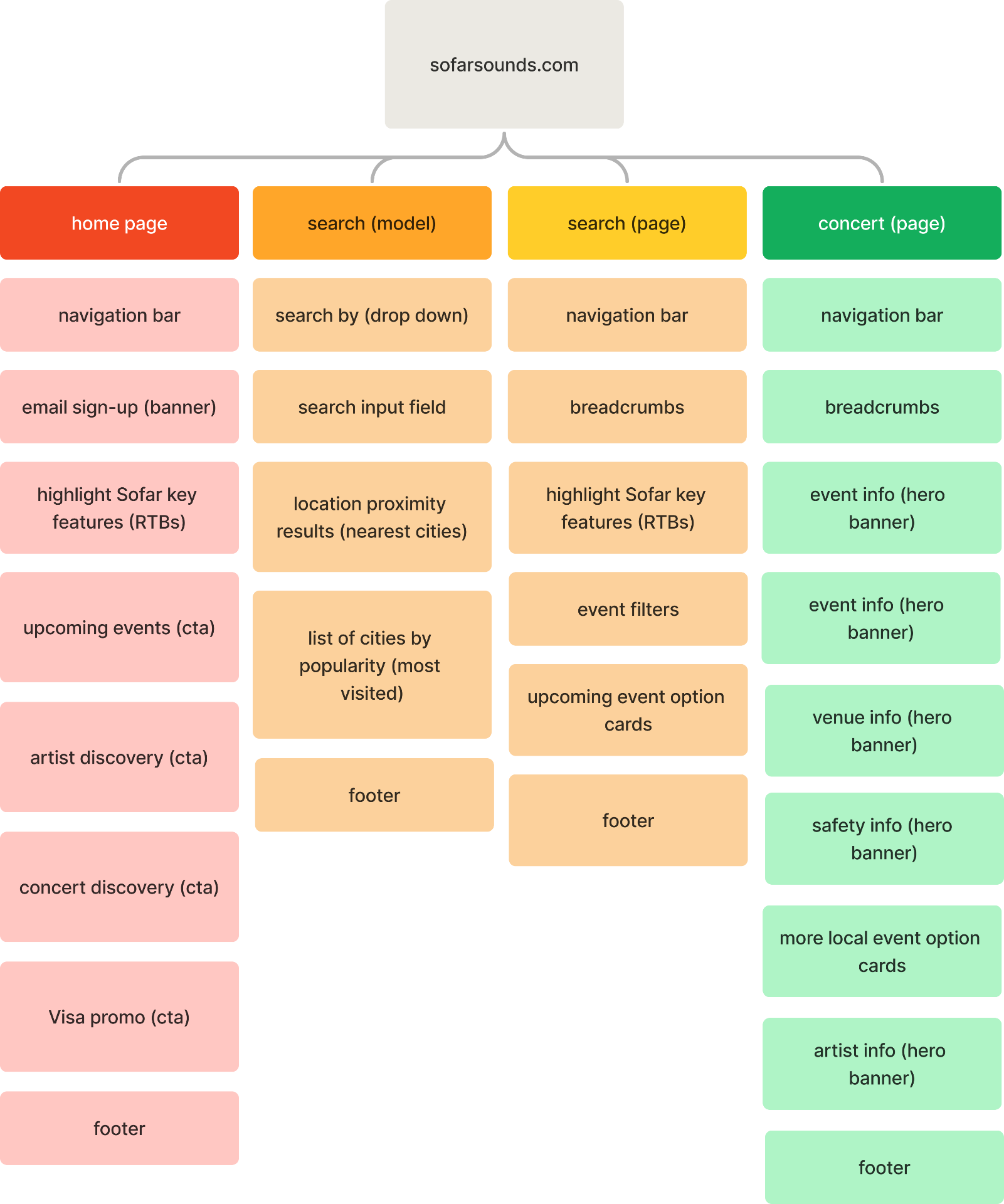
A frame from the working file - part of how the final experience came together.
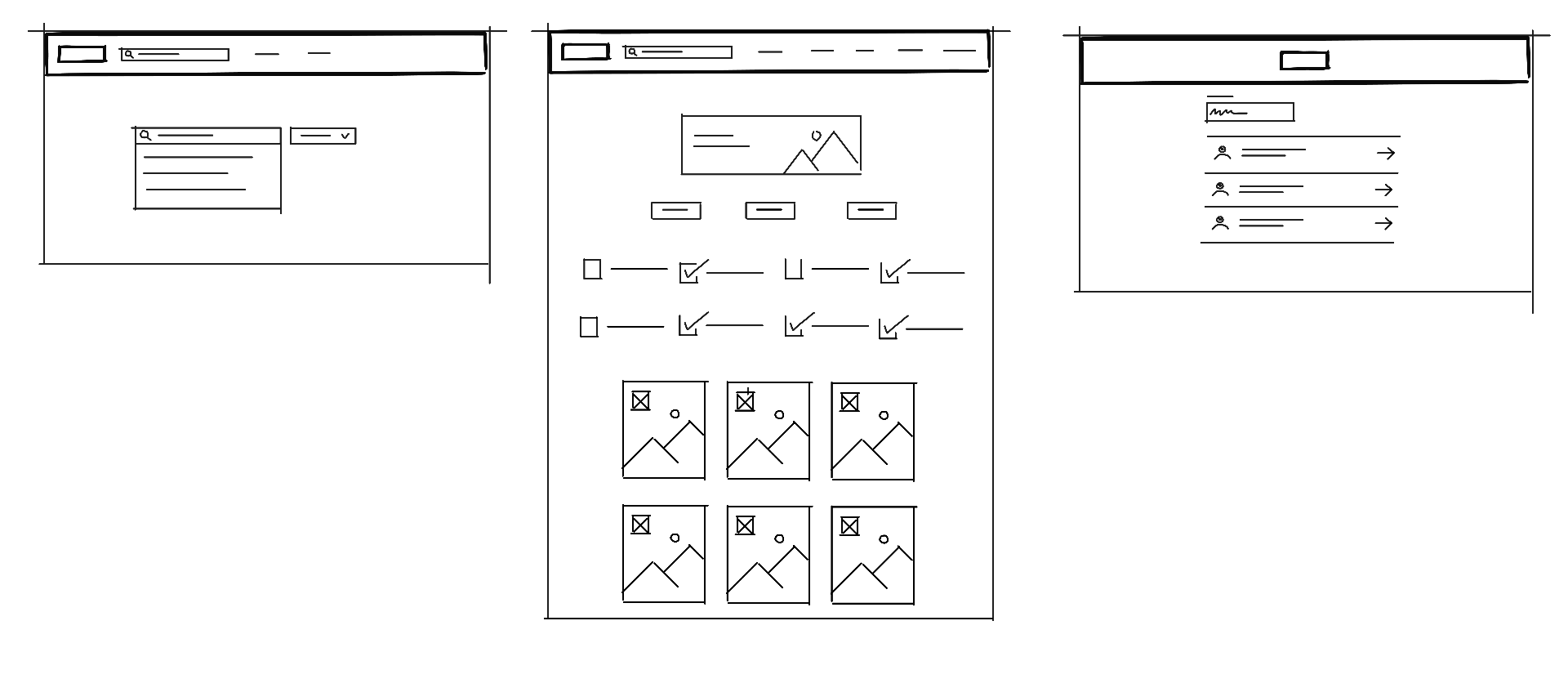
A frame from the working file - part of how the final experience came together.
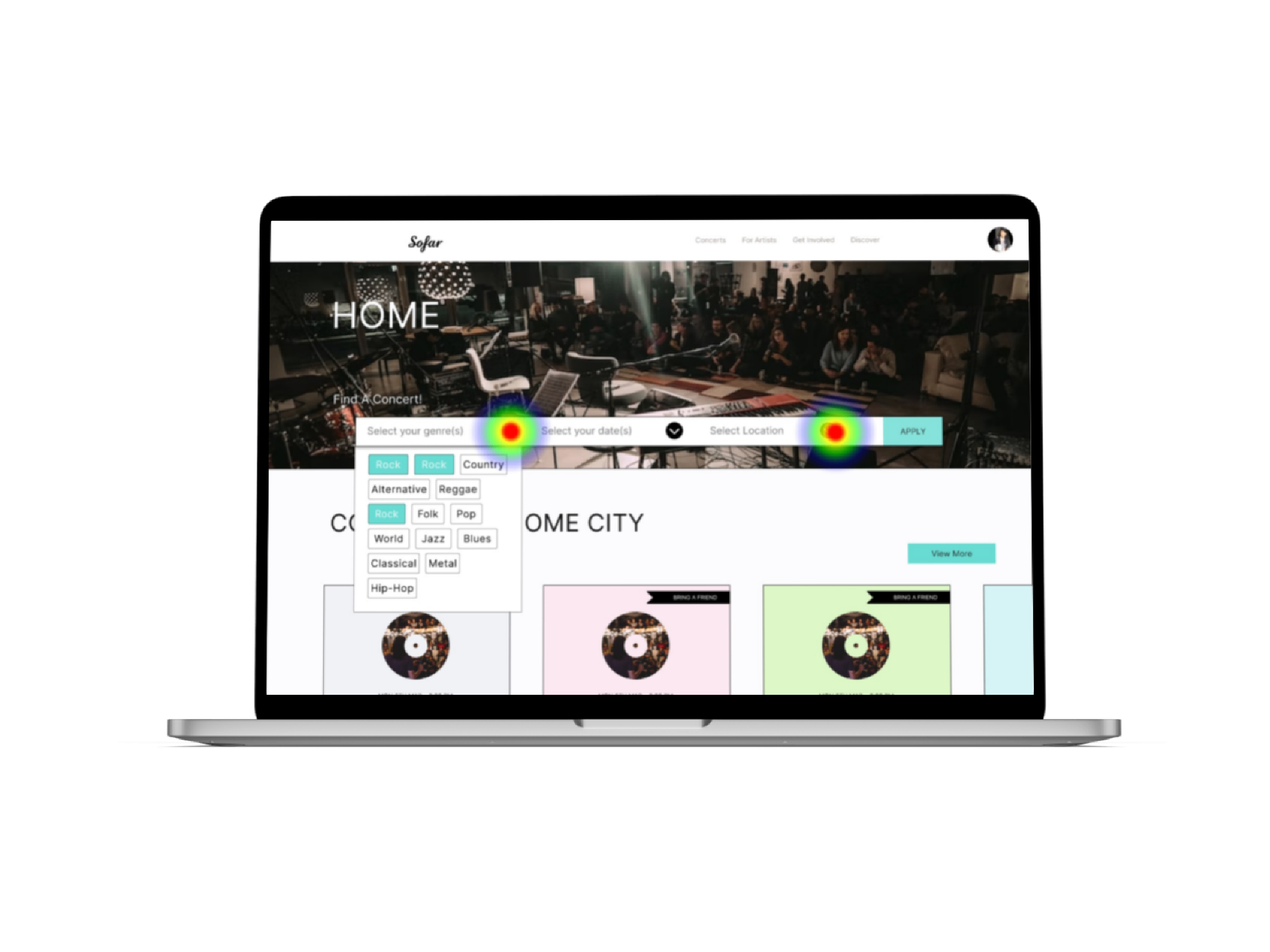
Heat mapping in Maze revealed where users instinctively clicked, hovered, and lingered across the search and filter flow. Those click patterns exposed friction points and confirmed which elements were pulling attention, guiding targeted refinements before hand-off.
Outcome
The redesigned search experience streamlined the path from genre curiosity to ticket purchase, giving fans a discovery flow that felt as intentional as the events themselves.
Data-informed iteration, grounded in the usability audit, SWOT analysis, IA review, and Maze testing, laid a foundation for continued, user-centered improvements to the platform.
Elevated
Search clarity
Reduced
Discovery friction
Data-informed
Design decisions
Next project